
Knowledge Base
Our Blogs
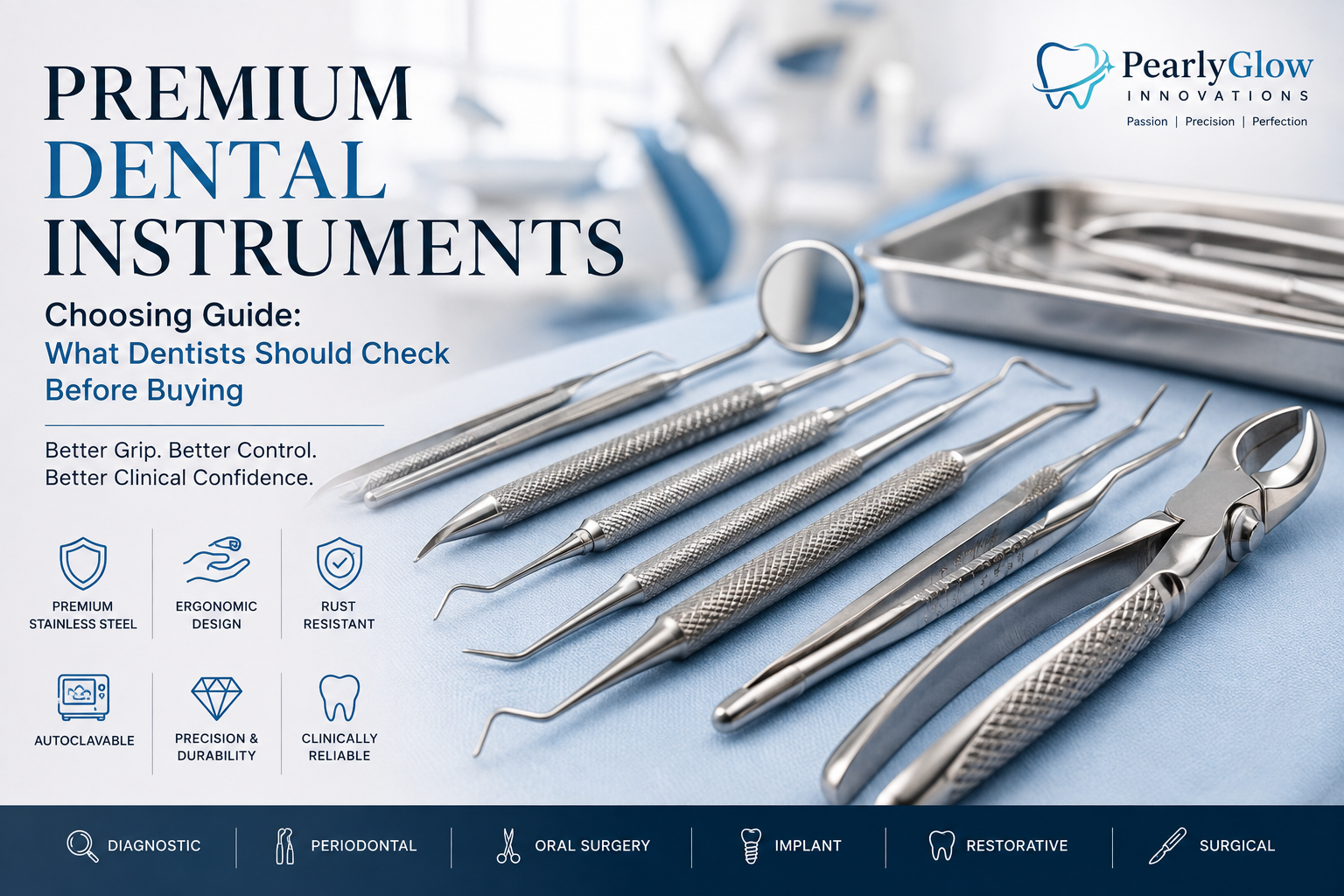
Premium Dental Instruments Choosing Guide: What Dentists Should Check Before Buying
Premium dental instruments should be selected based on clinical handling, stainless steel quality, grip, balance, surface finishing, rust resistance, autoclavability, and long-term chairside reliability.
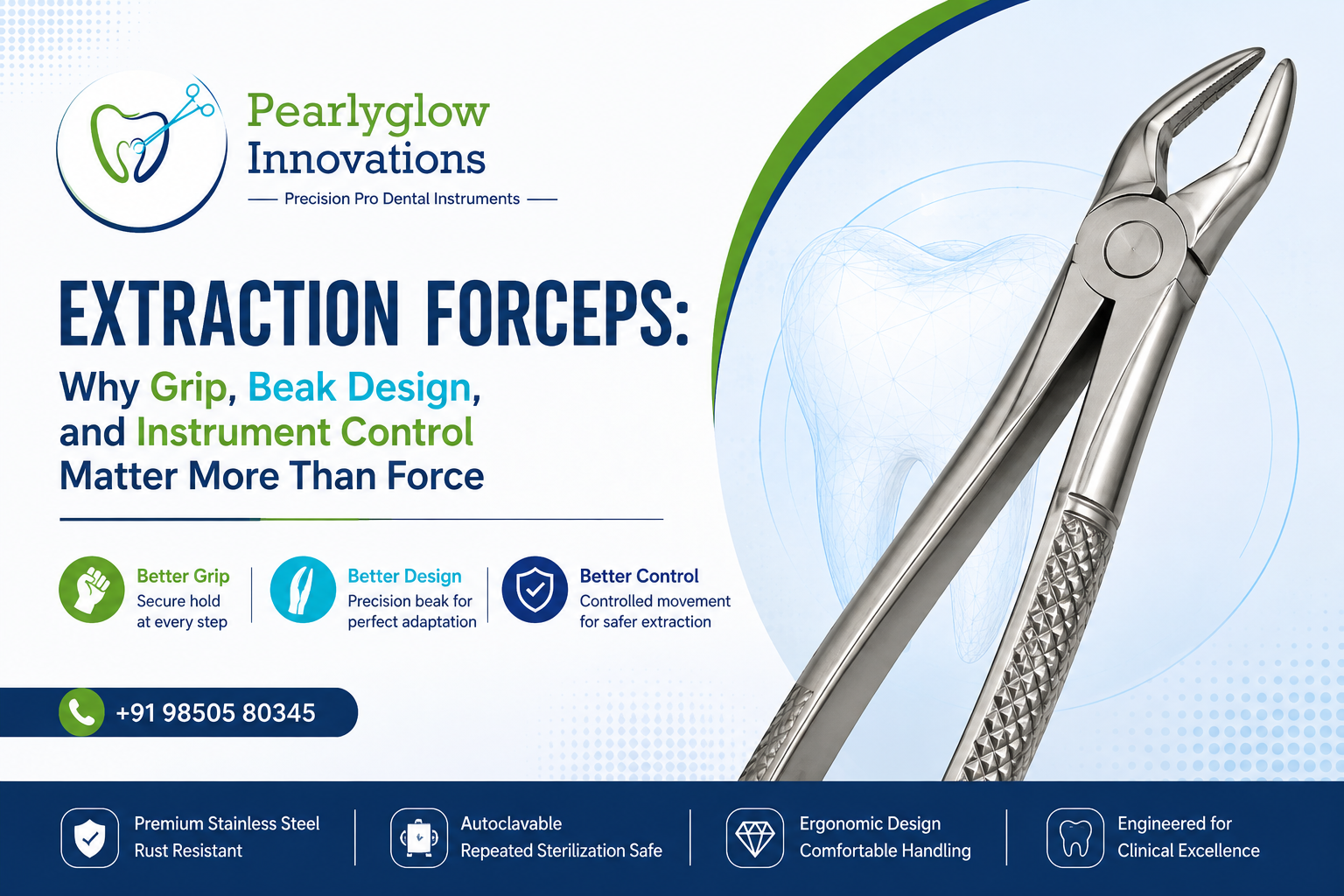
Extraction Forceps Buying Guide: Beak Fit, Grip, and Clinical Control
Choosing extraction forceps should never depend on appearance alone. Dentists should evaluate beak adaptation, hinge movement, handle grip, stainless steel quality, balance, and sterilization durability before buying.
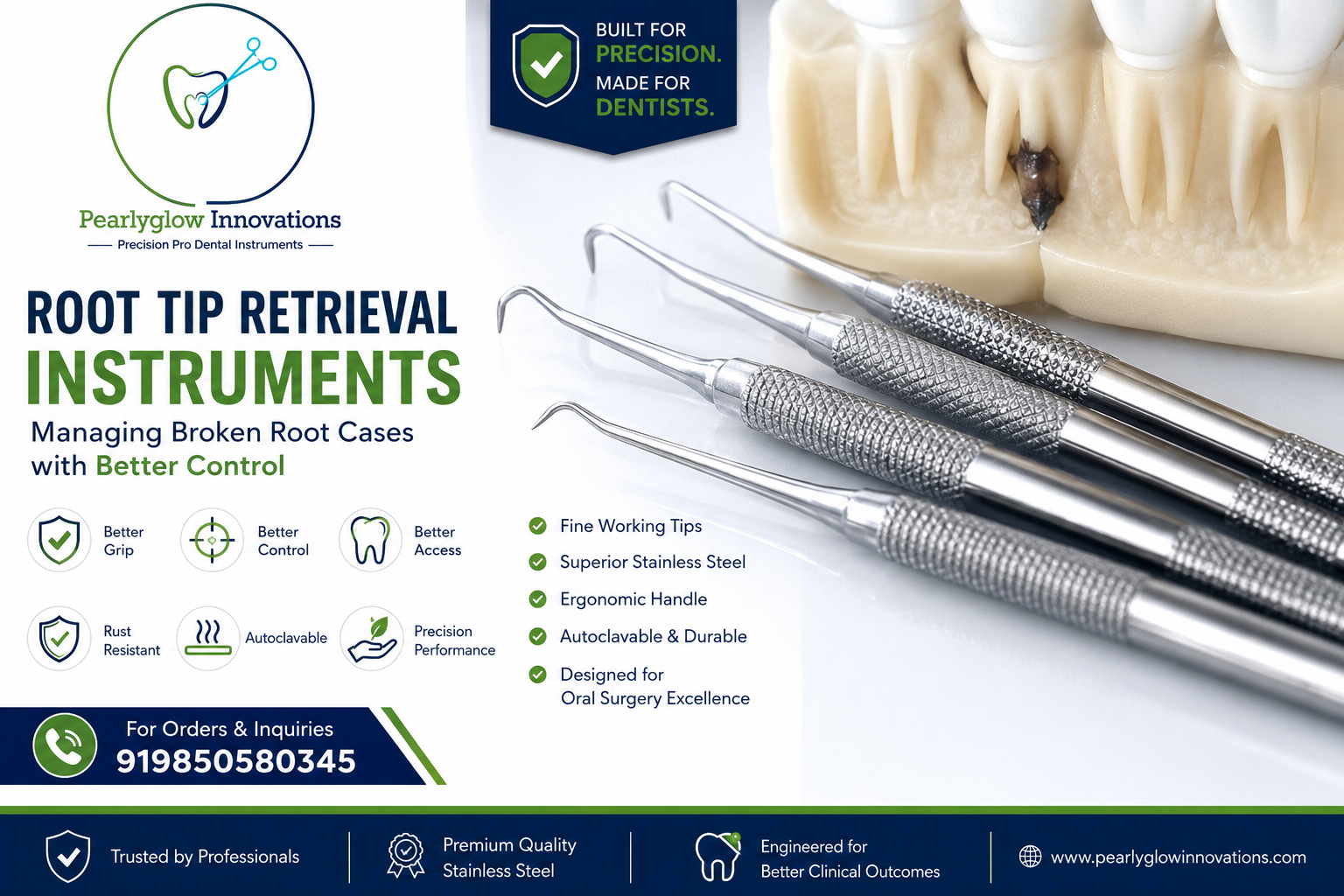
Root Tip Retrieval Instruments: Managing Broken Root Cases with Better Control
Root tip retrieval requires fine access, visibility, tactile feedback, and careful instrument selection. Dentists should understand how root tip picks, elevators, and surgical instruments support controlled fragment management.
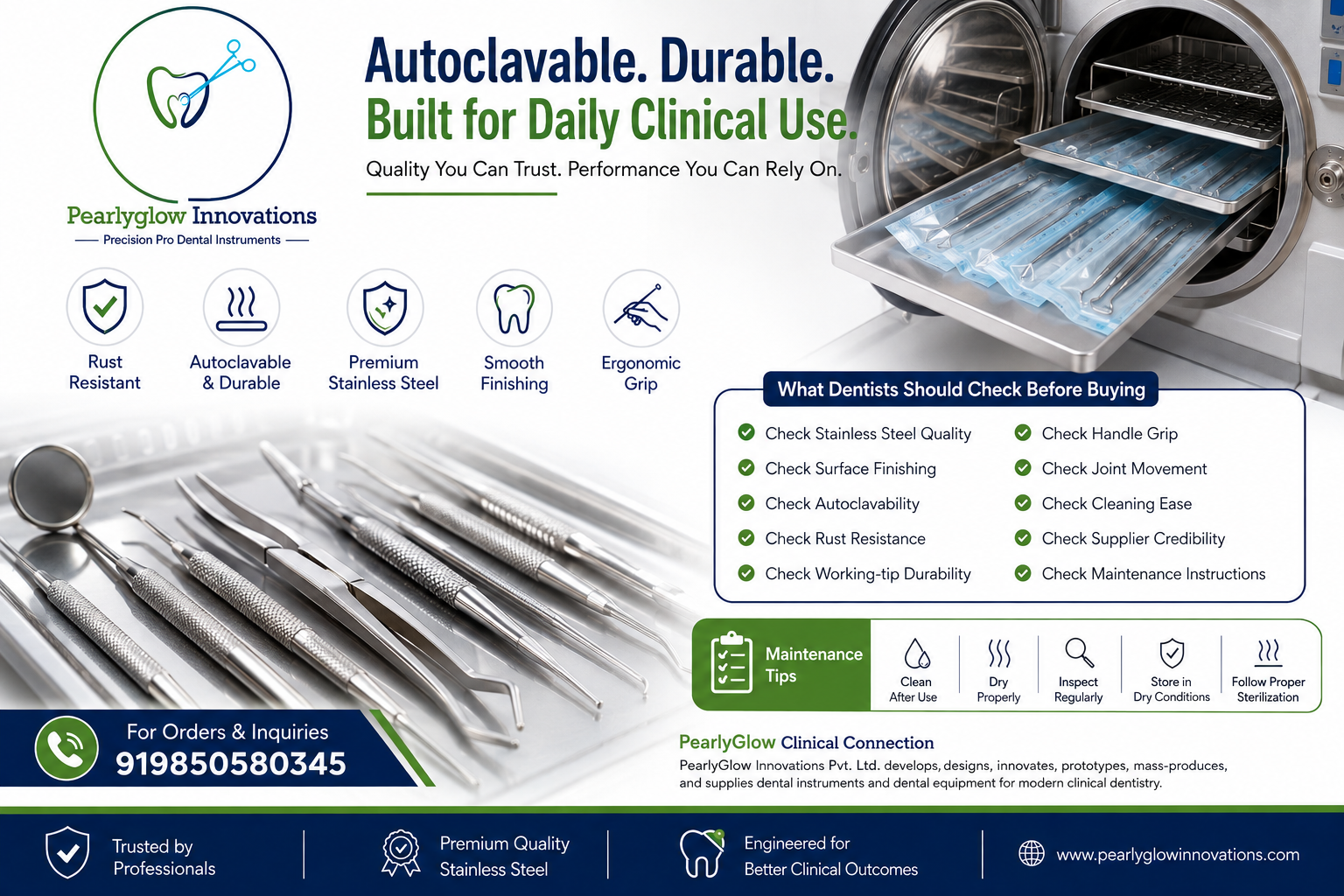
Autoclavable Stainless Steel Dental Instruments: What Dentists Should Know Before Buying
Autoclavable stainless steel dental instruments must tolerate repeated cleaning, sterilization, handling, and daily use. Steel quality, finishing, drying, and maintenance influence long-term reliability.

Why Dental Instruments Rust After Autoclave and How Dentists Can Prevent It
Dental instruments may show rust or staining after autoclave cycles due to moisture retention, poor cleaning, chemical exposure, surface damage, or low-quality stainless steel. Proper maintenance improves instrument life.
Gracey Curettes Clinical Guide: Root Adaptation, Tactile Control, and Periodontal Precision
Gracey curettes are essential periodontal instruments for subgingival scaling and root surface instrumentation. Dentists should evaluate blade design, sharpness, handle grip, balance, and tactile feedback.
Scaler Sharpness and Dentist Fatigue: The Clinical Link Dentists Should Not Ignore
Dental scaler sharpness directly affects clinical efficiency, hand pressure, tactile feedback, patient comfort, and dentist fatigue. Sharp, balanced, ergonomic scalers support better periodontal workflow.
Periodontal Probe Guide: Why One Millimetre Can Change Diagnosis
A periodontal probe helps dentists measure pocket depth, assess gingival health, monitor disease progression, and communicate findings. Clear markings, tactile control, and gentle pressure are essential.
Anti-Fog Dental Mirrors: Why Clear Visibility Changes Clinical Workflow
Anti-fog dental mirrors help dentists maintain clearer indirect vision during procedures. They support posterior visibility, reduced interruptions, better workflow, and more confident clinical movement.
Rhodium Mirror vs Simple Mirror: Which One Should Dentists Choose?
Rhodium mirrors and simple dental mirrors both support clinical visibility, but they differ in reflection quality, clarity, durability, and chairside experience. Dentists should choose based on daily clinical needs.
Latest Posts
Premium Dental Instruments Choosing Guide: What Dentists Should Check Before Buying
7/2/2026
Extraction Forceps Buying Guide: Beak Fit, Grip, and Clinical Control
7/2/2026
Root Tip Retrieval Instruments: Managing Broken Root Cases with Better Control
7/3/2026
Autoclavable Stainless Steel Dental Instruments: What Dentists Should Know Before Buying
7/3/2026
Why Dental Instruments Rust After Autoclave and How Dentists Can Prevent It
7/3/2026